











Bruce Campbell Adamson P.O. Box 3511, Santa
Cruz, CA, 95063-

Before there was George Bush or even George Washington there was George Calvert. Adamson's 11th Great Grandfather George Calvert.
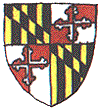
J.K. Rowling was commissioned with Success by becoming the Wizard Behind Harry Potter. Pure FICTION - The Brits Are Controlling the US media. They can not digest the Truth behind the Real Lord Baltimore? If you're really interested in the true Lord Baltimore than read on. Otherwise, Cheerio!
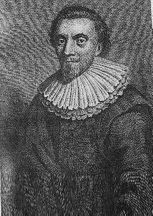 George
Calvert
George
CalvertThe oldest son of an obscure Yorkshire gentleman, George Calvert used ability and an Oxford education to gain wealth, status, and influence in the England of his time. Knighted in 1617, and a member of Parliament for Yorkshire in 1621, Calvert served as one of James I's two secretaries of state and a Privy Councilor from 1619 to 1625. Calvert would have been James' Secretary of State when he OK'd the voyage of the Mayflower. Adamson a descendant of Calvert is descended from seven passengers of the Mayflower.
As a recent convert to Catholicism, Calvert resigned from his government posts in the latter year, when anti-catholic legislation was being debated in Parliament. Created Baron Baltimore of Baltimore in 1625, with large estates in County Longford, Ireland, Calvert devoted the next seven years of his life to colonization projects in America.

Having sponsored a small colony at Ferryland in his Province of Avalon, Newfoundland, as early as 1620, Lord Baltimore visited his American possessions in 1627 and 1629, and by the latter date, was determined to obtain lands in a friendlier climate. His petition for a large colonial grant with unprecedented powers, located north of the Potomac River, was agreed to by Charles I , but Calvert died almost two months to the day before the charter for Maryland was accepted.
First Lord Baltimore, statesman and colonizer.
Born at Kiplin, Yorkshire, England, c. 1580; died in London,
England, 15 April, 1632. He graduated from Oxford in 1597. In
1605 he married a daughter of John Mayne, a lady of distinguished
family, who died in 1622. He spent some tim e on the continent, where he met Robert
Cecil, the secretary of state. After his return, Calvert was
made private secretary to Lord Cecil. He was soon appointed by
the king a Clerk of the Crown for the Province of Connaught and
the County Clare of Ireland. In 1609 he was sent to Parliament
from Bossiney. He was sent on a mission to the French Court in
1610 on the occasion of the accession of Louis XIII. Upon the
death of Lord Cecil in 1613, Calvert was made clerk of the Privy
Council. Afterwards he was sent by the king to Ireland to report
on the success of the policy of bringing the Irish people into
conformity with the Church of England. There was a great deal
of discontent among the Irish, and several commissions were appointed
to hear and report on the grievances. Calvert served on two of
these commissions. He became a favorite of King James I. He translated
into Latin the argument of the king against the Dutch theologian,
Vorstius. In 1617 the order of knighthood was conferred on him
and two years later he was appointed principal secretary of state.
Spain and France were rivals for English favor. Calvert, believing
Spain would be the better
e on the continent, where he met Robert
Cecil, the secretary of state. After his return, Calvert was
made private secretary to Lord Cecil. He was soon appointed by
the king a Clerk of the Crown for the Province of Connaught and
the County Clare of Ireland. In 1609 he was sent to Parliament
from Bossiney. He was sent on a mission to the French Court in
1610 on the occasion of the accession of Louis XIII. Upon the
death of Lord Cecil in 1613, Calvert was made clerk of the Privy
Council. Afterwards he was sent by the king to Ireland to report
on the success of the policy of bringing the Irish people into
conformity with the Church of England. There was a great deal
of discontent among the Irish, and several commissions were appointed
to hear and report on the grievances. Calvert served on two of
these commissions. He became a favorite of King James I. He translated
into Latin the argument of the king against the Dutch theologian,
Vorstius. In 1617 the order of knighthood was conferred on him
and two years later he was appointed principal secretary of state.
Spain and France were rivals for English favor. Calvert, believing
Spain would be the better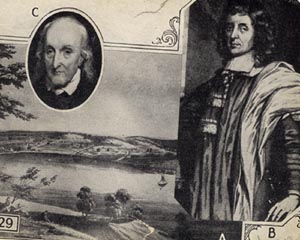 friend or more formidable foe, favored the proposed
marriage of Charles, Prince of Wales, with the Infanta Maria,
daughter of Philip III, although the majority in Parliament were
opposed to this union. In the year 1620 the king made Calvert
one of the commissioners for the office of treasurer. In 1621
he served in Parliament as a representative from Yorkshire, and
in 1624 from Oxford. He was one of the minority that favored
the Spanish Court policy. He also tried to be a conciliator between
the king and the country party. As a reward for faithful service
the king granted him (in 1621) a manor of 2300 acres, in the
county of Longford, Ireland, on the condition that all settlers
"should be conformable in point of religion." Calvert,
becoming a Catholic, in 1624, surrendered this manor, but received
it again, with the religious clause omitted. On becoming a Catholic
he resigned his secretaryship. The king retained him in his Privy
Council and in 1625, elevated him to the Irish Peerage as Baron
Baltimore of Baltimore in County Longford. After the death of
James, Charles offered to dispense with the oath of religious
supremacy, if Calvert would remain in the council, but Calvert
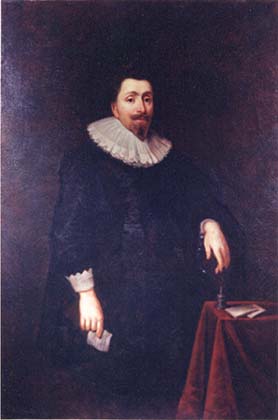
declined. Portrait to
left it Jesuit Priest Andrew White and George Calvert with Baltimore
in the background.
friend or more formidable foe, favored the proposed
marriage of Charles, Prince of Wales, with the Infanta Maria,
daughter of Philip III, although the majority in Parliament were
opposed to this union. In the year 1620 the king made Calvert
one of the commissioners for the office of treasurer. In 1621
he served in Parliament as a representative from Yorkshire, and
in 1624 from Oxford. He was one of the minority that favored
the Spanish Court policy. He also tried to be a conciliator between
the king and the country party. As a reward for faithful service
the king granted him (in 1621) a manor of 2300 acres, in the
county of Longford, Ireland, on the condition that all settlers
"should be conformable in point of religion." Calvert,
becoming a Catholic, in 1624, surrendered this manor, but received
it again, with the religious clause omitted. On becoming a Catholic
he resigned his secretaryship. The king retained him in his Privy
Council and in 1625, elevated him to the Irish Peerage as Baron
Baltimore of Baltimore in County Longford. After the death of
James, Charles offered to dispense with the oath of religious
supremacy, if Calvert would remain in the council, but Calvert
declined. Portrait to
left it Jesuit Priest Andrew White and George Calvert with Baltimore
in the background.
Lord Baltimore purchased a plantation in
Newfoundland in 1620, which he called Avalon, and quasi-royal
authority was given him. He went to Avalon in 1627 to observe
conditions in the province and to establish a colony where all
might enjoy freedom in worshipping God. He landed at Fairyland,
the settlement of the province, in 1627 and remained till fall.
When he returned next spring he brought with him his family,
including Lady Baltimore, his second wife, and about forty colonists.
On his first visit to Avalon he brought two priests, and on his
second visit one priest. After Lord Baltimore's second visit
to Avalon, a Protestant minister, Mr. Stourton, went back to
England and co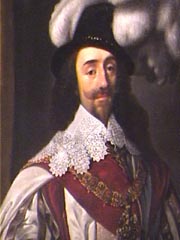 mplained to the Privy Council that his patron was
having Mass said in the province, and that he favored the Catholics.
No attention, however, was paid to Stourton's complaints. In
the war with France French cruisers attacked the English fisheries,
and Lord Baltimore's interests suffered heavily. King Charles
to right painting courtesy of the Missouri Historical Society.
Charles signed the Maryland Charter for Cecil Calvert, second
Lord Baltimore.
mplained to the Privy Council that his patron was
having Mass said in the province, and that he favored the Catholics.
No attention, however, was paid to Stourton's complaints. In
the war with France French cruisers attacked the English fisheries,
and Lord Baltimore's interests suffered heavily. King Charles
to right painting courtesy of the Missouri Historical Society.
Charles signed the Maryland Charter for Cecil Calvert, second
Lord Baltimore.
About 1628 Lord Baltimore requested a new grant in a better climate. In the following year, before word came before the king, he went to Virginia and being a Catholic, was received with various indignities. He returned to England and at first received from Charles a grant of land south of the James River. Meeting opposition from some of the Virginia company, he sought another grant north and east of the Potomac, which he obtained. Before the charter was granted, however, he died. It is claimed that he dictated its provisions. Baltimore's works are "Carmen Funebre in D. Hen. Untonum." in a collection of verses on Sir Henry Unton's death, 1596; "The Answer to Tom Tell-troth: The Practice of Princes and the Lamentations of the Kirk," (1642), a justification of the policy of King James in refusing to support the claim of the Elector Palatine to the crown of Bohemia;
One of the most remarkable documents in all the history of Maryland is the letter written by the first Lord Baltimore from Newfoundland, George Calvert, to King Charles I, requesting the grant of "a precinct of land" in Virginia, where he might make a settlement. The ultimate result of this appeal was the Charter of Maryland. A copy of this letter, which appears to be a contemporary draft, probably made by of Calvert's company, the last page of which is reproduced below, was purchased in London in 1929 by Dr. Hugh H. Young, along with some thirty-nine other important papers which had belonged to the second and third Lords.
These documents had been turned over to their solicitor by the Calverts for use in connection with the litigation concerning the Pennsylvania boundary. They were acquired by Dr. Young when offered for sale by descendants of the solicitor. In 1943, he generously presented the whole collection to the library.
It will be recalled that George, Lord Baltimore, had established a colony in Newfoundland as early as 1621, but was too busy with affairs of state to go out to it till after his retirement from the secretaryship. Following a short visit in 1627 to Avalon, as the colony was called, he returned next year with most of his family and spent a hard winter there. On August 19, 1629, he writes to the King from Ferryland, in Avalon, as follows:
"From the midst of October to the midst of May there is a sad face of winter upon all this land, both sea and land so frozen for the greatest part of the time as they are not penetrable no plant or vegetable thing appearing out of the earth until it be about the beginning of May, nor fish in the sea besides the air so intolerable cold as it is hardly to be endured. By means whereof, and of much salt, meat, my house has been hospital all this winter, of 100 persons 50 sick at a time, myself being one and nine of ten or them died. Hereupon I have had strong temptations to leave all proceeding in plantations, and being much decayed in my strength to retire myself to my former quiet; but my inclination carrying me naturally to these kind of works, and not knowing how better to employ the poor reminder of my days than with other good subjects to further the best I may the enlarging your Majesty's empire in this part of the world I am determined to commit this place to fishermen that are better able to encounter storms and hard weather, and to remove myself with some 40 persons to your Majesty's dominion of Virginia, where if your Majesty will please to grant me a precinct of land with such privileges as the King your father my gracious master was pleased to grant me here, I shall endeavor to the utmost of my power to deserve it and pray for your Majesty's long and happy reign as
your Majesty's most humble &
faithful subject and servant.
Geo. Baltimore
Ferryland 19, August 1629"
In 1632 George Calvert sent his son Leonard Calvert and 300 settlers to America. The following year Calvert established a new colony, Maryland, at the mouth of the Potomac River. Calvert became Maryland's first governor and although he retained ownership of the land he agreed to make laws only after consulting the freemen of the colony. Leonard Calvert died in Maryland on 9th June, 1647. Anne, Leonard's daughter was the progenitor of Bruce Adamson
His motto, on his own coat-0f-arms well expressed the tenor of his life "womanly words, manly deeds"---fatti maschii, parole femine. In all his correspondence there runs a broad vein of kindliness, sympathy, energy and courage. Possessing a strong will and a sound judgment, he moved along quietly, doing his work thoroughly and conscientiously. His ambition was lofty, but it was legitimate; it did not carry him into temperate zeal or into corrupt practices. Judging him from the brief notice he has received from English historians, he occupied, in thier estimation, but an unimportant place in the history of his times; but in America he will be long r emembered for the impetus he gave to discoveries, to trade, and to the planting of colonies, and in Maryland his name will continually remembered in honor and devotion, not only as the founder of the State, but as the first one to introduced in the New World a palatinate form of government, and a palatinate so wisely planned as to secure to each individual the fullest toleration in relgion and the greatest freedom in political and civil life; a palatinate so constituted that the Catholic, the Protestant and the Quaker might each quietly enjoy his religion, and in the enjoyment of his religion be protected, tolerated; and, as an Englishman, be allowed civili, political, and social rights and privileges, without distinction of party, class, or creed. In his lofty ideal, the founder of Maryland contemplated neither a great empire swayed by one political ruler, nor a great hierarchy controlled by one spiritual head, but a state founded upon the principles of justice, equality and liberty, a state established and built upon the basis of civil and common law, but guided and controlled by those principles of ecclesiastical polity that would meet the universal acceptance of all its citizens."
| © 2004 Bruce Campbell Adamson info@ciajfk.com |  |